Clean drinking water is essential for good health, and a water purifier plays a vital role in protecting your family or customers from waterborne diseases. However, many people focus only on buying a good purifier and forget one crucial aspect—regular servicing. Without proper maintenance, even the best water purifier can fail to deliver safe and clean water.
So, how often should you service your water purifier? The answer depends on the type of purifier, water quality, and usage. In this expert guide, we’ll explain ideal service intervals, signs your purifier needs attention, and professional tips to keep your system running at peak performance.
Why Regular Water Purifier Servicing Is Important
Water purifiers continuously filter out dust, sand, chemicals, bacteria, and dissolved salts. Over time, these impurities accumulate in filters and membranes.
If servicing is ignored:
Water quality reduces
Flow rate becomes slow
Taste and odor change
System parts wear out faster
Health risks increase
Regular servicing ensures:
Consistent water purity
Better taste and clarity
Longer purifier lifespan
Reduced repair costs
Factors That Decide Service Frequency
There is no single service schedule for all purifiers. Service frequency depends on the following factors:
1. Type of Water Purifier
Different purification technologies have different maintenance needs.
2. Input Water Quality
High TDS, hard water, or muddy water requires more frequent servicing.
3. Daily Water Consumption
Larger families and commercial use increase filter load.
4. Domestic vs Commercial Use
Commercial systems need more frequent servicing than home units.
Service Frequency by Purifier Type
RO Water Purifiers
RO systems require the most attention due to multiple filtration stages.
Recommended service schedule:
General servicing: Every 3–4 months
Pre-filters (sediment & carbon): Every 6–12 months
RO membrane: Every 18–36 months
Post-carbon/mineral filter: Every 12 months
RO purifiers working in high-TDS areas may need more frequent servicing
UV Water Purifiers
UV systems kill bacteria using UV lamps but do not remove dissolved salts.
Service schedule:
General servicing: Every 6 months
UV lamp replacement: Every 12 months
Carbon filter replacement: Every 6–12 months
Regular UV lamp checks are critical to ensure disinfection.
UF Water Purifiers
UF purifiers use membranes to block bacteria and sediments.
Service schedule:
Servicing: Every 6 months
UF membrane replacement: Every 12–24 months
UF systems are suitable for low-TDS water but still need regular cleaning.
Gravity-Based Water Purifiers
These are non-electric and require minimal maintenance.
Service schedule:
Cleaning: Every 1–2 months
Filter replacement: Every 6–12 months
Even basic systems need timely filter changes for safe water.
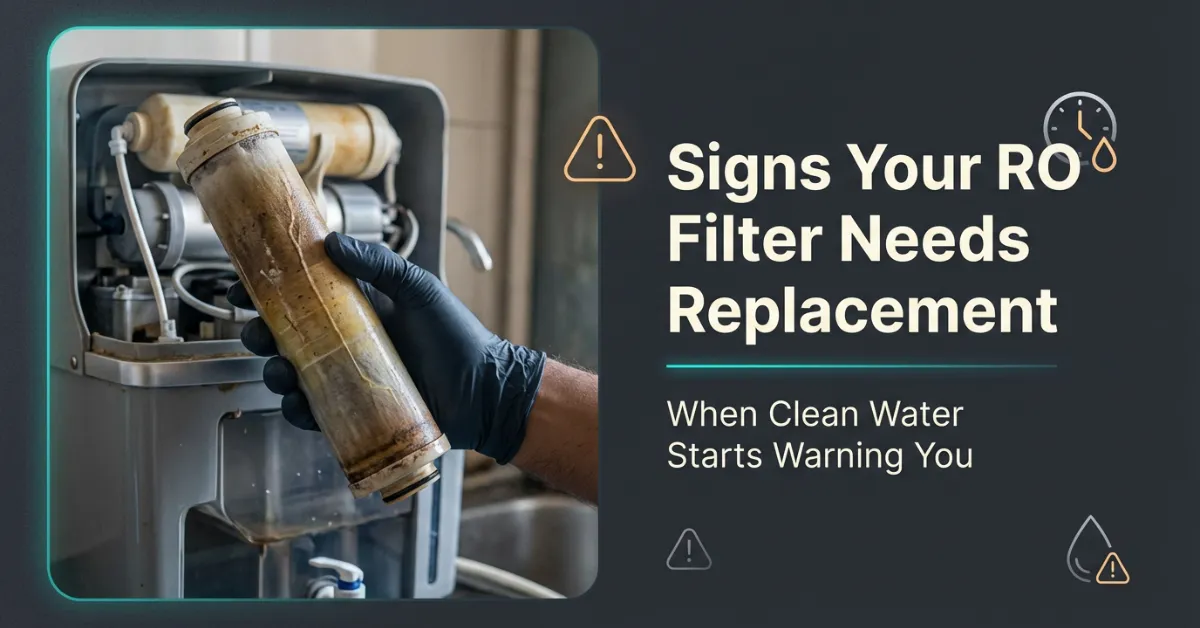
Signs Your Water Purifier Needs Immediate Servicing
Even if your purifier hasn’t reached its service date, look out for these warning signs:
Change in water taste or smell
Reduced water flow
Cloudy or colored water
Increase in TDS level
Excessive drain water (RO)
Unusual noise from the system
If you notice any of these signs, don’t wait for the next service date.
Domestic vs Commercial Servicing Needs
Domestic Water Purifiers
Servicing: Every 3–6 months
Filter replacement: As per usage
Suitable for small families
Commercial Water Purifiers
Used in offices, hotels, shops, hospitals, and schools.
Servicing: Monthly or quarterly
Filter replacement: More frequent
Requires professional monitoring
Commercial systems face higher water load and must be serviced more often.
Expert Tips to Extend Service Life
1. Monitor TDS Regularly
Use a TDS meter once a month to track water quality changes.
2. Don’t Delay Filter Replacement
Delayed replacement damages the RO membrane and pump.
3. Keep Storage Tank Clean
Clean the water tank every 6 months to avoid bacterial growth.
4. Ensure Proper Water Pressure
Low or high pressure affects purifier performance.
5. Use Genuine Spare Parts
Cheap duplicate filters reduce water quality and system life.
Is AMC Worth It? Expert Opinion
An Annual Maintenance Contract (AMC) is highly recommended for both domestic and commercial users.
Benefits of AMC:
-
Scheduled servicing
-
Timely filter replacement
-
Lower repair costs
-
Priority service support
-
Peace of mind
AMC ensures your purifier is serviced at the right time without reminders.
DIY vs Professional Servicing
What You Can Do at Home
Clean the exterior
Check water taste and flow
Monitor TDS levels
What Needs a Technician
Filter and membrane replacement
Internal cleaning and sanitization
Pressure and pump inspection
Professional servicing ensures safety and optimal performance.
Cost of Water Purifier Servicing
Service costs vary based on:
Type of purifier
Number of filters
Brand and model
Domestic or commercial use
However, regular servicing is far cheaper than major repairs or system replacement.
Common Servicing Mistakes to Avoid
Skipping service due to “no visible problem”
Using low-quality filters
Ignoring water quality changes
Overusing filters beyond lifespan
Avoiding these mistakes ensures long-term water safety.
Final Thoughts
So, how often should you service your water purifier?
RO systems: Every 3–4 months
UV & UF systems: Every 6 months
Gravity systems: Regular cleaning and annual filter replacement
Timely servicing keeps your water purifier efficient, extends its lifespan, and most importantly, protects your health. Follow expert advice, observe warning signs, and consider AMC for hassle-free maintenance.
Because when it comes to drinking water, maintenance is not optional—it’s essential.
FAQ's
No. Even if the water tastes normal, filters and internal parts may be clogged. Regular servicing is necessary to maintain purification efficiency and safety.
Yes. High TDS or hard water causes filters and membranes to clog faster, increasing the need for frequent servicing, especially in RO systems.
A standard service usually takes 30 to 60 minutes, depending on the purifier type and whether filter replacement is required.
Yes. Apartments often receive treated water and may need less frequent servicing, while independent houses using borewell water usually require more frequent maintenance.
Delayed servicing can lead to poor water quality, reduced flow, membrane damage, higher electricity usage, and potential health risks.