Access to safe drinking water is one of the most important public health needs. In cities like Trichy (Tiruchirappalli), where water sources vary widely from river supply to deep borewells, a common question among residents is:
“Is Trichy water really safe for drinking?”
The answer is not a simple yes or no. Water safety in Trichy depends on where your water comes from, how it is stored, seasonal factors, and how it is treated before consumption. This blog provides a local, practical analysis of Trichy’s drinking water conditions, helping households and businesses make informed decisions.
Understanding Drinking Water Safety
Drinking water is considered safe when it is:
Free from harmful bacteria and viruses
Low in excessive dissolved salts and chemicals
Clear, odorless, and pleasant-tasting
Within acceptable limits for minerals
Even water that looks clean may not always be safe. Many contaminants are invisible and can only be detected through testing or long-term health effects.
Main Drinking Water Sources in Trichy
Trichy uses a mix of water sources, each with its own safety considerations:
1. River-Based Supply
Water drawn from nearby river systems and distributed through municipal pipelines is treated before supply. While treatment reduces risk, safety depends heavily on pipeline condition and storage hygiene.
2. Borewell and Groundwater
A large portion of Trichy residents rely on private borewells, especially in residential layouts and outskirts. Groundwater quality varies significantly based on depth and location.
3. Tanker Water
In areas facing water shortages, tanker water is commonly used. Its safety depends entirely on the source and handling practices, which are often unknown.
What Makes Trichy Water a Concern for Drinking?
1. Aging Water Infrastructure
In many localities, old pipelines increase the risk of contamination due to:
Leaks
Mixing with sewage lines
Pressure fluctuations
This means water that is treated at the source may not remain safe by the time it reaches homes.
2. Seasonal Variations
Water safety in Trichy changes with seasons:
Summer:
- Increased dependence on groundwater
- Higher mineral concentration due to low water tables
Monsoon:
- Higher risk of bacterial contamination
- Muddy or turbid water in some areas
As a result, water that feels safe during one season may not be safe year-round.
3. Storage-Related Risks
Even good-quality supply water can become unsafe due to:
Dirty overhead tanks
Open sumps
Infrequent tank cleaning
Many households unknowingly consume contaminated water due to poor storage hygiene.
Is Trichy Municipal Water Safe Without a Purifier?
Municipal water is usually treated to meet basic safety standards. However, in real-life conditions:
Supply is intermittent
Water may stagnate in pipelines
Tanks may not be cleaned regularly
Because of these factors, boiling or purifying municipal water is strongly recommended, especially for children and elderly people.
Groundwater Safety: A Bigger Concern
Groundwater safety is more unpredictable than municipal supply.
Why Borewell Water Needs Attention
Mineral content varies widely
May contain excess salts or chemicals
Not disinfected by default
Many households use borewell water for years without testing, assuming it is safe because it looks clear.
Health Issues Linked to Unsafe Drinking Water
Unsafe or untreated drinking water may cause:
Frequent stomach infections
Diarrhea and vomiting
Skin irritation
Dental issues
Long-term stress on kidneys
These problems often develop gradually, making it hard to link them directly to water quality.
How Do Trichy Residents Usually Treat Drinking Water?
Based on common practices:
Boiling
Effective against bacteria
Does not remove dissolved salts or chemicals
Candle or Gravity Filters
Useful for basic filtration
Not sufficient for groundwater
RO and Multi-Stage Purifiers
Most reliable option for varying water quality
Suitable for mixed water sources
Many households upgrade purification systems after facing repeated health or maintenance issues.
What Tests Determine Drinking Water Safety?
If you want to know whether your water is safe, these tests are essential:
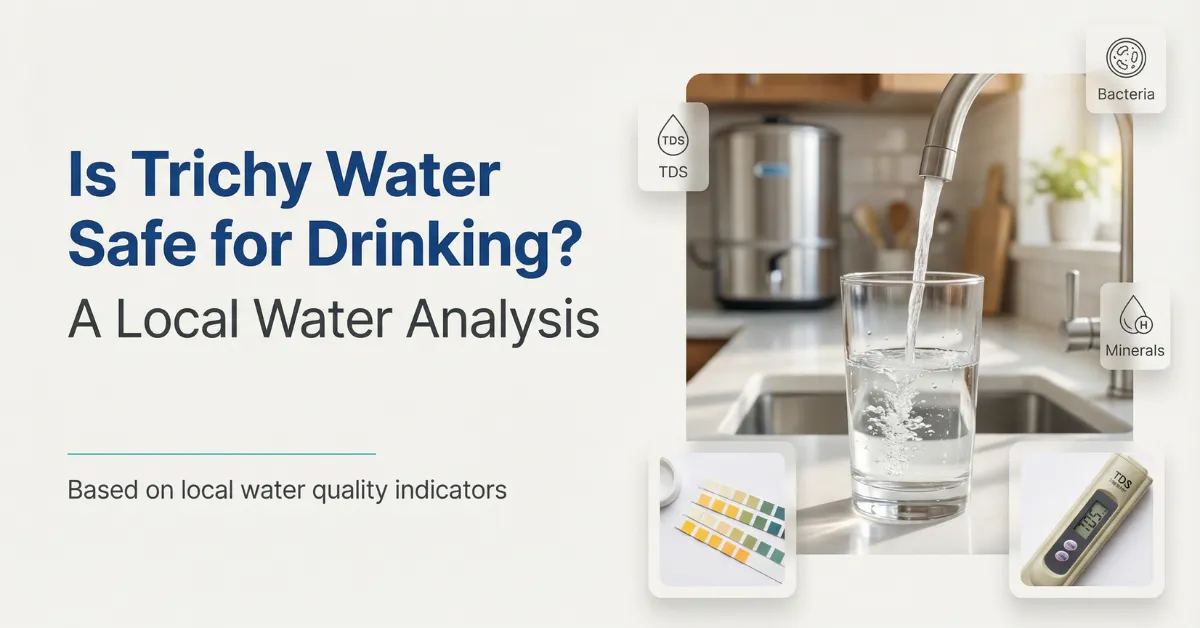
TDS (Total Dissolved Solids)
pH level
Turbidity (clarity)
Bacterial presence
Odor and taste assessment
Testing once or twice a year gives a clear picture of water safety.
Local Challenges That Affect Water Safety
Urban Expansion
Rapid development increases demand on existing water infrastructure, often reducing quality.
Groundwater Overuse
Deeper borewells draw water with higher mineral concentration.
Inconsistent Monitoring
Water quality can change without notice, especially in private supply systems.
Is RO Water Always Necessary in Trichy?
Not always—but often.
RO purification is recommended if:
Water source changes frequently
Borewell depth is high
Taste varies regularly
Family members have health sensitivities
In some areas with consistently treated water, simpler purification may be sufficient.
Commercial Establishments: Higher Responsibility
Offices, hotels, schools, and hospitals in Trichy must be extra cautious because:
Higher water consumption
Greater health risk exposure
Legal and reputational responsibility
Regular testing and professional water treatment are essential for commercial users.
How Often Should Water Quality Be Checked?
Experts recommend:
Every 6 months for households
Every 3 months for commercial establishments
Immediately if water taste, smell, or appearance changes
Water safety is not a one-time check—it’s an ongoing process.
Simple Steps to Improve Drinking Water Safety at Home
Clean overhead tanks every 6 months
Avoid open storage containers
Use proper purification systems
Service purifiers regularly
Monitor changes in taste or smell
These small steps significantly reduce health risks.
Future of Drinking Water Safety in Trichy
With increasing population and groundwater stress:
Water safety challenges may grow
Dependence on purification systems will increase
Preventive maintenance will become essential
Public awareness and responsible water use will play a key role in ensuring safe drinking water for future generations.
Final Verdict: Is Trichy Water Safe for Drinking?
Trichy water can be safe—but not without precautions.
Municipal water is relatively safer but still needs purification
Borewell and tanker water should never be consumed untreated
Seasonal and location-based variations make purification essential
The safest approach is testing your water, choosing the right purification method, and maintaining it regularly.
Clean drinking water is not just about convenience—it’s about long-term health and peace of mind.
FAQ's
Yes. Water safety in Trichy varies depending on the source, pipeline condition, groundwater depth, and local storage practices, even within nearby neighborhoods.
Yes. Many harmful contaminants like bacteria and dissolved salts are invisible and cannot be detected by appearance, taste, or smell alone.
Boiling kills bacteria but does not remove dissolved minerals, salts, or chemical contaminants commonly found in groundwater.
Seasonal changes affect groundwater levels and pipeline pressure, increasing the risk of contamination during monsoon and mineral concentration during summer.
Regular water testing, proper storage hygiene, timely purifier servicing, and using suitable purification systems ensure consistent water safety.