Introduction
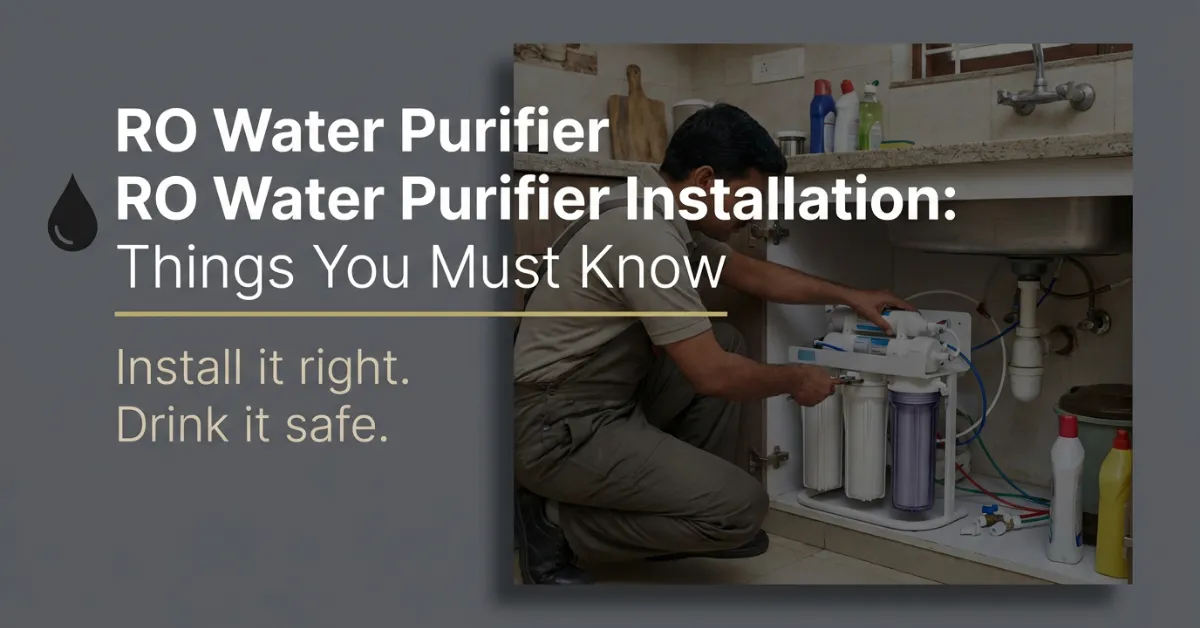
Installing an RO (Reverse Osmosis) water purifier is one of the best decisions you can make to ensure safe and healthy drinking water for your home or business. However, many people focus only on buying the purifier and overlook the importance of proper installation. Incorrect installation can reduce water quality, increase wastage, damage the system, and shorten its lifespan.
Whether you are installing a domestic RO purifier at home or a commercial RO system for your office or shop, understanding the installation process is crucial. This blog covers everything you must know before, during, and after RO water purifier installation, helping you avoid common mistakes and get the best performance from your system.
1. Understand Your Water Source Before Installation
Before installing an RO purifier, it is essential to know the quality of your input water.
Key Water Parameters to Check
- TDS (Total Dissolved Solids) level
- Water source (municipal, borewell, tanker)
- Presence of iron, hardness, or heavy metals
- Water pressure
Why This Matters
- High TDS water requires a strong RO membrane
- Low TDS municipal water may need RO + UV
- Iron or hard water may require pre-treatment
Testing water before installation ensures the RO system is correctly configured.
2. Choose the Right RO System
Selecting the right RO purifier based on your usage is critical.
For Homes
- 8–12 liters per hour capacity
- RO or RO + UV + UF combination
- Inbuilt storage tank
For Offices and Shops
- 25–50 LPH commercial RO system
- External storage tank
- Continuous operation support
For Hotels and Commercial Use
- 50–100 LPH or higher
- Industrial-grade components
- Professional installation required
Choosing the wrong system can lead to poor performance and frequent breakdowns.
3. Ideal Installation Location
Choosing the correct location is a key part of RO installation.
Things to Consider
- Near a water inlet and drainage point
- Easy access for maintenance
- Away from direct sunlight and heat
- Dry and well-ventilated area
Common Installation Locations
- Kitchen wall or under the sink (domestic RO)
- Utility room or service area (commercial RO)
Avoid installing RO systems in damp or exposed areas.
4. Water Pressure Requirements
RO systems require adequate water pressure to function properly.
Recommended Pressure
- Minimum: 10–15 psi
- Ideal: 40–60 psi
What If Pressure Is Low?
- Use a booster pump
- Install a pressure pump if required
Low water pressure can reduce purification efficiency and water output.
5. Electrical Requirements
RO purifiers need electricity to operate the pump and UV lamp (if available).
Important Points
- Standard 230V power supply
- Dedicated power socket recommended
- Avoid loose connections
For commercial RO systems, ensure proper electrical wiring and safety switches.
6. Proper Drain Line Connection
RO systems generate wastewater during purification, which must be drained properly.
Drain Line Tips
- Connect to a sink drain or dedicated outlet
- Ensure proper slope for water flow
- Avoid blockages or bends
Improper drain connection can cause leakage and system failure.
7. Storage Tank Installation
Domestic RO Systems
- Inbuilt storage tanks (7–10 liters)
- Automatic cut-off when tank is full
Commercial RO Systems
- External storage tanks (100–1000+ liters)
- Proper float valve installation
Correct tank installation ensures uninterrupted water supply.
8. Pre-Filters and Their Importance
Pre-filters protect the RO membrane and improve system life.
Types of Pre-Filters
- Sediment filter – removes dust and sand
- Carbon filter – removes chlorine and odor
Ensure pre-filters are installed correctly and replaced on time.
9. RO Membrane Installation
The RO membrane is the heart of the purifier.
Key Installation Tips
- Handle carefully to avoid damage
- Ensure correct membrane housing
- Flush membrane before use
A poorly installed membrane can reduce water quality.
10. Post-Filters and Mineral Cartridges
Post-filters improve taste and add essential minerals.
Things to Check
- Correct flow direction
- Secure fittings
- Timely replacement
Mineral cartridges should be installed only if required.
11. First-Time Flushing After Installation
After installation, flushing is mandatory.
Why Flushing Is Important
- Removes carbon dust and preservatives
- Cleans internal components
Discard the first 1–2 full tanks of water before drinking.
12. Common Installation Mistakes to Avoid
- Installing without water testing
- Ignoring water pressure requirements
- Poor drain connection
- Using low-quality pipes and fittings
- Skipping initial flushing
Avoiding these mistakes ensures long-term performance.
13. Professional vs DIY Installation
Professional Installation
- Recommended for commercial RO systems
- Ensures correct setup
- Warranty protection
DIY Installation
- Possible for basic domestic RO units
- Requires technical knowledge
For most users, professional installation is safer.
14. Post-Installation Maintenance Tips
- Replace filters every 6–12 months
- Clean storage tank periodically
- Check for leaks
- Schedule regular servicing
Proper maintenance begins from correct installation.
15. Installation Cost Overview
Domestic RO Installation
- Low to moderate cost
- Usually included with product purchase
Commercial RO Installation
- Higher cost
- Includes plumbing, wiring, and setup
Installation cost is a one-time investment for long-term safety.
16. Safety and Hygiene Considerations
- Use food-grade pipes and tanks
- Avoid contamination during installation
- Ensure clean surroundings
Hygiene during installation directly affects water quality.
17. Environmental Considerations
Modern RO systems are designed to reduce water wastage.
Best Practices
- Use water-saving RO systems
- Reuse wastewater for cleaning
- Choose high-recovery RO models
18. Signs of Improper Installation
- Low water output
- Continuous water flow to drain
- Bad taste or odor
- Frequent breakdowns
If you notice these signs, get the installation checked immediately.
Conclusion
Proper RO water purifier installation is just as important as choosing the right purifier. From understanding your water source to selecting the right location, ensuring correct pressure, and avoiding common mistakes, every step plays a vital role in performance and safety.
A well-installed RO system provides pure, safe, and great-tasting water, reduces maintenance issues, and extends the life of your purifier. Always prioritize professional installation, quality components, and regular maintenance to get the best results from your RO water purifier.
FAQ's
Before installation, you should check your water source, TDS level, water pressure, electricity availability, and proper drainage to ensure smooth RO operation.
An RO water purifier typically requires a minimum water pressure of 10–15 psi, with 40–60 psi being ideal for optimal performance.
Professional installation is recommended, especially for commercial RO systems, as it ensures correct setup, prevents leaks, and maintains warranty validity.
The first 1–2 tanks of water should be discarded to flush out carbon dust, preservatives, and impurities from new filters and membranes.
Low water output, continuous drainage, leakage, unusual noise, or bad taste in water are common signs of improper RO installation.
Related posts