Clean and safe drinking water is not a luxury—it’s a basic necessity. RO (Reverse Osmosis) water purifiers play a crucial role in removing dissolved salts, chemicals, heavy metals, and other contaminants from water. However, many people assume that once an RO system is installed, it will continue working perfectly for years without attention. In reality, RO filters and membranes need timely replacement to maintain water quality and system performance.
Ignoring filter replacement can lead to poor-tasting water, health risks, and even damage to your RO system. In this detailed guide, we’ll explore all the important signs that indicate your RO filter needs replacement, why it happens, and what you should do next.
Why RO Filter Replacement Is Important
An RO purifier works using multiple stages of filtration, such as:
Sediment filter
Carbon filter
RO membrane
Post-carbon / mineral filter
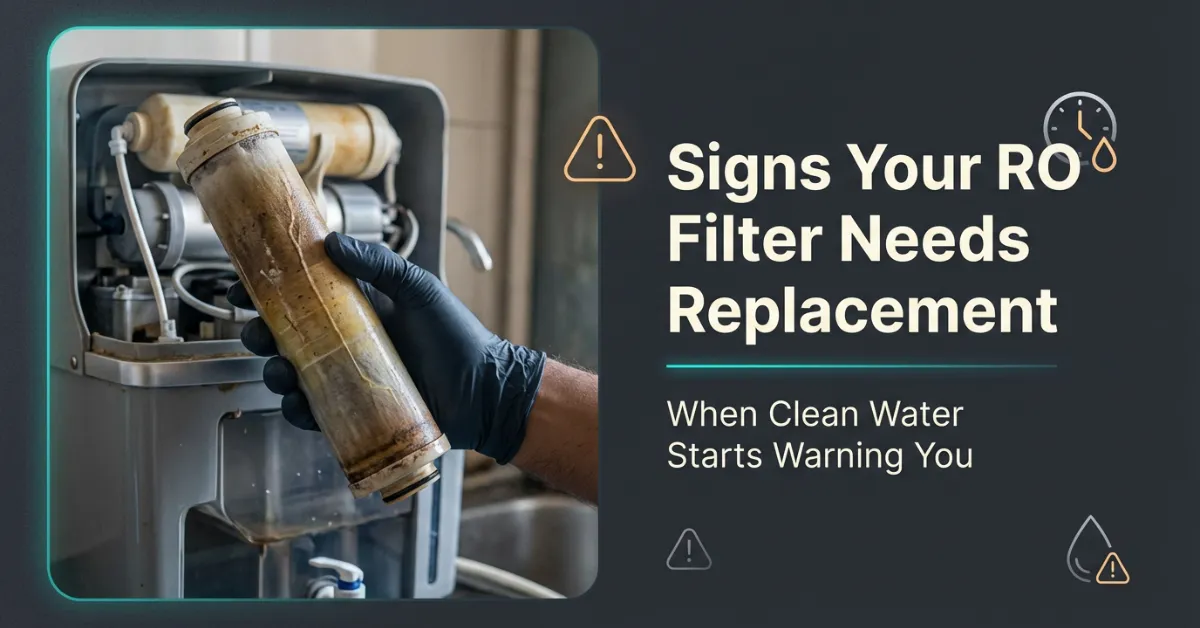
Each filter has a specific role and a limited lifespan. Over time, filters get clogged with dirt, chlorine, chemicals, and dissolved impurities. When this happens:
Water purification efficiency drops
Flow rate reduces
Harmful contaminants may pass through
Regular replacement ensures:
Consistently safe drinking water
Better taste and odor
Longer life of the RO system
Lower maintenance costs in the long run
1. Change in Water Taste
One of the earliest and most noticeable signs of filter failure is a change in the taste of water.
What you may notice:
Bitter or metallic taste
Salty flavor
Flat or unpleasant aftertaste
Why it happens:
Carbon filters and RO membranes are responsible for removing chlorine, dissolved salts, and chemicals. When these filters are exhausted, they can no longer trap impurities effectively.
What to do:
If water taste changes suddenly or gradually worsens, it’s time to check and replace the carbon filter or RO membrane.
2. Foul or Unusual Odor in Water
Clean RO water should be odorless. If you notice a bad smell, it’s a strong indication that the filters are no longer working properly.
Common odors include:
Chlorine smell
Rotten or musty odor
Chemical-like smell
Possible reasons:
Saturated carbon filter
Bacterial growth inside old filters
Poor maintenance or delayed servicing
Solution:
Immediate filter replacement and system sanitization are recommended to prevent health risks.
3. Reduced Water Flow from the RO Tap
If your RO purifier is taking too long to fill a glass or bottle, don’t ignore it.
Causes of low water flow:
Clogged sediment filter
Choked carbon filter
Damaged or blocked RO membrane
As filters trap more impurities over time, water flow becomes restricted.
Action step:
If flow rate drops even after cleaning storage tank and checking water pressure, replace the pre-filters immediately.
4. Increase in TDS Level
TDS (Total Dissolved Solids) is a key indicator of water purity.
Warning signs:
TDS reading is higher than usual
Purified water TDS is close to input water TDS
Why this happens:
A worn-out RO membrane cannot effectively remove dissolved salts and heavy metals.
Ideal scenario:
RO water TDS should be significantly lower than input water
Sudden rise indicates membrane failure
What to do:
Get the RO membrane tested and replaced if required.
5. Water Looks Cloudy or Has Particles
RO-purified water should always be clear.
Visible signs:
Cloudy appearance
Floating particles
White or black sediments
Likely causes:
Sediment filter failure
Carbon filter breakdown
Improper filtration due to worn-out filters
Solution:
Replace sediment and carbon filters immediately to restore clarity.
6. RO System Making Unusual Noise
While RO systems make slight operational noise, new or loud sounds are a red flag.
Types of unusual sounds:
Continuous humming
Vibrating noise
Loud motor sound
Possible reasons:
Blocked filters causing pressure buildup
Pump working harder due to clogged filters
Fix:
Replacing clogged filters reduces pressure stress and prevents pump damage.
7. Continuous Drain Water Flow
Some drain water is normal in RO systems, but excessive or continuous drain flow is not.
Signs to watch:
Water continuously flowing to drain
Low purified water output
Why it happens:
RO membrane failure
Choked filters disrupting pressure balance
Action:
Check membrane condition and replace it if drain flow remains constant.
8. RO System Is More Than 6–12 Months Old
Even if no obvious problem is visible, time itself is a major factor.
General filter replacement timeline:
Sediment filter: Every 6–12 months
Carbon filter: Every 6–12 months
RO membrane: Every 18–36 months (depends on water quality)
Post-carbon/mineral filter: Every 12 months
If your system hasn’t been serviced within this period, filters are likely overdue for replacement.
9. Frequent RO Breakdowns or Errors
Old and clogged filters strain the entire system.
Symptoms include:
Frequent service calls
Pump failure
Auto cut-off issues
Why this happens:
Neglected filter replacement increases pressure load and damages internal components.
Prevention:
Timely filter replacement avoids costly repairs and extends system life.
10. Health Issues or Digestive Problems
This is a serious but often overlooked sign.
Possible symptoms:
Stomach upset
Diarrhea
Bad smell in water despite filtration
Cause:
Ineffective filtration allows bacteria, heavy metals, or chemicals to pass through.
Important note:
If multiple people at home face similar issues, stop using RO water until filters are replaced and system is sanitized.
How Often Should You Replace RO Filters?
Replacement frequency depends on:
Input water quality
Daily water consumption
System usage (domestic or commercial)
Average replacement schedule:
Domestic RO: Every 6–12 months
Commercial RO: Every 3–6 months (filters), membrane as per usage
Regular servicing or AMC ensures filters are replaced on time.
Benefits of Timely RO Filter Replacement
Safe and healthy drinking water
Better taste and odor
Improved water flow
Lower electricity consumption
Longer RO system lifespan
Reduced repair costs
AMC: The Smart Way to Avoid Filter Issues
An Annual Maintenance Contract (AMC) ensures:
Scheduled filter replacement
Professional servicing
Emergency support
Peace of mind
For both homes and businesses, AMC is the easiest way to maintain consistent RO performance.
Conclusion
RO filters don’t last forever. Changes in taste, smell, flow rate, TDS, or system behavior are clear indicators that your RO filter needs replacement. Ignoring these signs can compromise water quality, health, and the life of your purifier.
By staying alert to these warning signs and following a regular maintenance schedule, you can ensure your RO system delivers clean, safe, and great-tasting water every day.
If in doubt, always consult a professional technician—clean water is worth it.
FAQ's
The earliest signs include a change in water taste, slow water flow, and unusual odor in the purified water.
Yes. Clogged filters increase pressure on the pump and membrane, which can lead to system damage and costly repairs if not replaced on time.
Excessive drain water usually indicates a choked RO membrane or blocked filters that disturb normal pressure balance.
No. Cloudy water indicates poor filtration or filter failure and should not be consumed until filters are replaced and the system is serviced.
Not always. Pre-filters may need frequent replacement, while the RO membrane lasts longer. However, replacing filters together during servicing ensures better performance.
Related posts