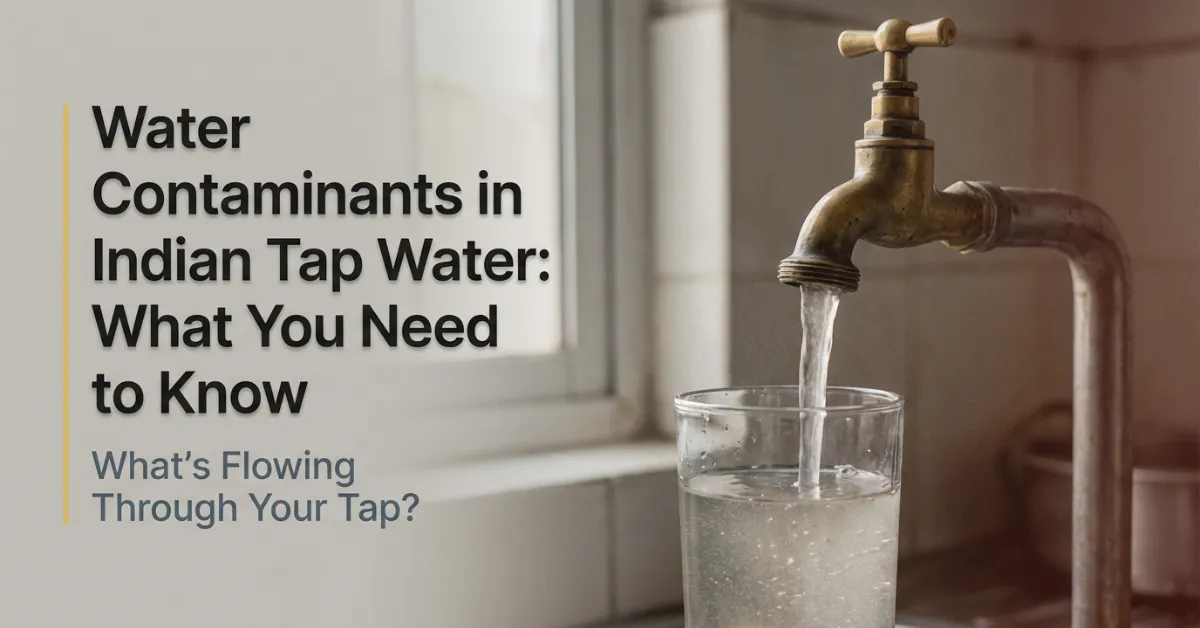
When you turn on your tap at home, do you ever stop to think about what’s actually flowing out? Most of us assume the water supplied by our municipality is safe. After all, it’s treated water, right?
But here’s the reality: Indian tap water often carries hidden contaminants that can harm your health in the long run. From bacteria to heavy metals, what looks crystal clear might not be as safe as it seems. Let’s break it down together.
Why Should You Worry About Tap Water?
India struggles with aging pipelines, untreated sewage, industrial pollution, and contaminated groundwater. All of these factors make their way into the water supply system. And once it reaches your home, it may look fine but still contain invisible threats.
Think about it—just because water looks clean doesn’t mean it is clean.
The Usual Suspects: What’s Really in Tap Water?
1. Microbial Contaminants
Ever heard of E. coli, Salmonella, or Giardia? These bacteria and parasites sneak into the water supply through sewage leaks or poor sanitation.- Risks: Diarrhea, cholera, typhoid, stomach infections.
- Signs: If you or your family often fall sick with stomach issues, water could be the culprit.
2. Heavy Metals
Lead, arsenic, and mercury sound like something from a science lab, right? Sadly, they’re also found in Indian tap water, often due to corroded pipes and industrial waste.- Risks: Kidney damage, developmental issues in children, neurological problems.
- Scary fact: Even small amounts of lead can affect brain development in kids.
3. Chemical Pollutants
Chlorine is added to water for disinfection, but too much of it can cause health problems. On top of that, pesticides and nitrates seep into water supplies, especially in farming regions.- Risks: Hormonal imbalance, skin irritation, long-term organ damage.
- Example: Excess fluoride can lead to dental or skeletal fluorosis—common in many Indian states.
4. Hard Water Minerals
Hard water isn’t dangerous, but it can still cause issues. With high calcium and magnesium levels, it leaves scaling on utensils, damages appliances, and may even contribute to kidney stones.What Can You Do to Stay Safe?
Now, here’s the good news—you don’t need to panic. There are simple steps you can take to make your water safer:
Boil your water – a tried-and-tested method to kill most germs.
Use a water purifier – RO + UV filters are great for removing heavy metals and microbes.
Get your water tested – a lab test once a year can reveal hidden problems.
Store water properly – always in clean, covered containers.
Stay updated – check your local water supply updates or government schemes like the Jal Jeevan Mission.
The Bigger Picture
While individual precautions matter, clean water for all is something only strong infrastructure and strict monitoring can guarantee. Till then, it’s up to us to make sure our families drink safe water every day.
After all, water is life—and safe water is health.
