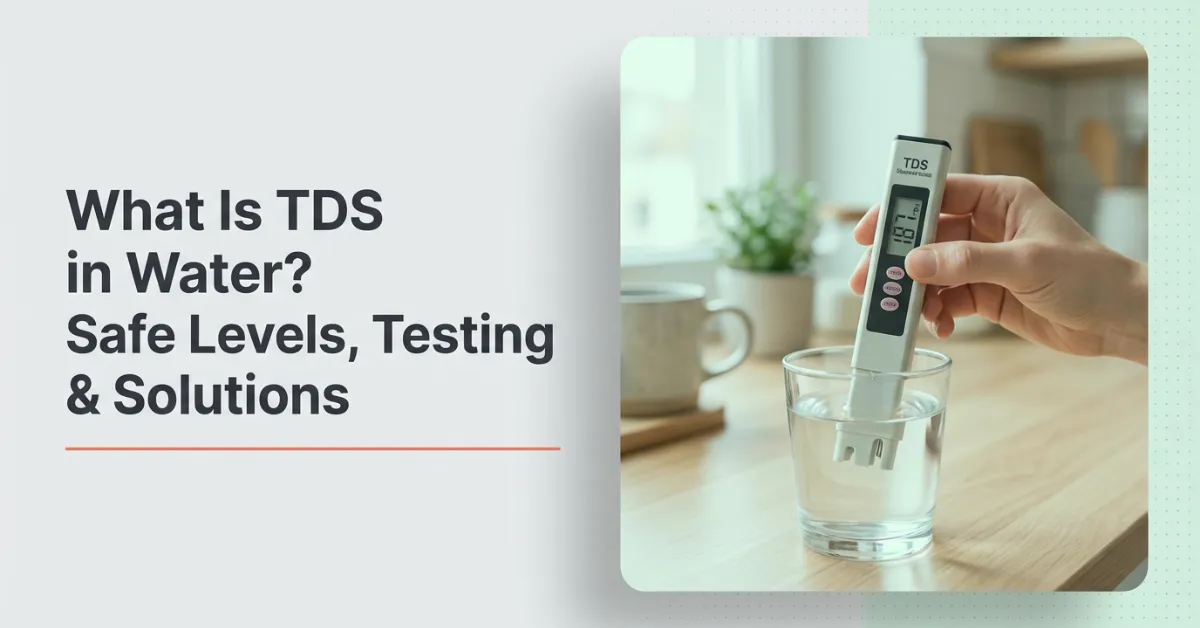
Water is life—but not all water is the same. Most of us check if water looks clean or tastes okay, but there’s more to it than meets the eye. One important factor often overlooked is TDS, or Total Dissolved Solids. Understanding TDS can help you ensure that the water you drink is safe, healthy, and good-tasting.
In this blog, we’ll cover:
- What TDS is
- Safe TDS levels
- How to test your water
- Solutions for high or low TDS
What Is TDS in Water?
TDS stands for Total Dissolved Solids, which means all the tiny substances—both organic and inorganic—dissolved in water. These include:
- Minerals: Calcium, magnesium, potassium, sodium
- Salts: Chlorides, sulfates, bicarbonates
- Trace metals: Iron, zinc, and sometimes harmful metals like lead or arsenic
A small amount of TDS is actually beneficial. Minerals like calcium and magnesium are essential for bone health, heart function, and hydration. But too much TDS—or too little—can affect taste, health, and even the lifespan of your appliances.
Safe Levels of TDS in Drinking Water
| TDS Level (mg/L) | Water Quality | Health & Taste Impact |
| 0–50 | Excellent | Very low minerals; water may taste flat |
| 50–150 | Good | Balanced minerals; ideal for daily drinking> |
| 150–300 | Fair | Acceptable taste; good for health |
| 300–500 | Poor | Noticeable taste changes; long-term consumption may affect health |
| 500+ | Unacceptable | Can be harmful; avoid drinking without treatment |
How TDS Affects Health and Taste
- High TDS: Can indicate excessive salts or harmful metals like arsenic, which may cause kidney issues, hypertension, and other long-term problems.
- Low TDS: Water may lack essential minerals, affecting electrolyte balance and hydration.
- Water with moderate TDStastes fresh and slightly sweet due to balanced minerals.
- High TDS water may taste salty or metallic.
- Low TDS water may taste flat or bland.
How to Test TDS in Water
Testing TDS is simple and can give you peace of mind. Here are the methods:
1. TDS Meter
- Small, portable, and very easy to use. Just dip it into water, and it gives an instant reading.
- Great for checking tap water, borewell water, or bottled water.
2. Laboratory Testing
- Most accurate method. Recommended if you suspect industrial contamination, heavy metals, or chemicals in your area.
3. Home Test Kits
- Affordable kits indicate TDS range visually and are handy for quick checks.
Solutions for High or Low TDS
1. High TDS Water
- Use RO (Reverse Osmosis) purifiers, which effectively remove dissolved salts, metals, and harmful chemicals.
- Regularly maintain and change filters to ensure efficiency.
- Combine with UV or UF filters to remove microbial contaminants as well.
2. Low TDS Water
- Low TDS water may taste flat and lack essential minerals.
- You can use mineral cartridges or add mineral drops to balance the water.
- Avoid long-term drinking of completely demineralized water, as it may affect health.
3. General Tips
- Regularly clean water storage tanks to prevent secondary contamination.
- Avoid storing water in plastic containers for long periods.
- Keep track of water quality changes during monsoon or drought seasons.
TDS and Your Appliances
High TDS water doesn’t just affect health—it can also damage household appliances:
- Kettles and boilers develop scaling.
- RO purifiers may clog faster.
- Washing machines may leave white deposits on clothes.
Keeping TDS in the recommended range protects both your health and your appliances.
FAQ's
- High TDS: May contain excess salts or harmful metals, leading to kidney issues, hypertension, or other long-term health problems.
- Low TDS: Lacks essential minerals, which may cause electrolyte imbalance and flat-tasting water.
- To reduce high TDS, use an RO purifier with proper filter maintenance.
- To increase low TDS, use mineral cartridges, drops, or filters
