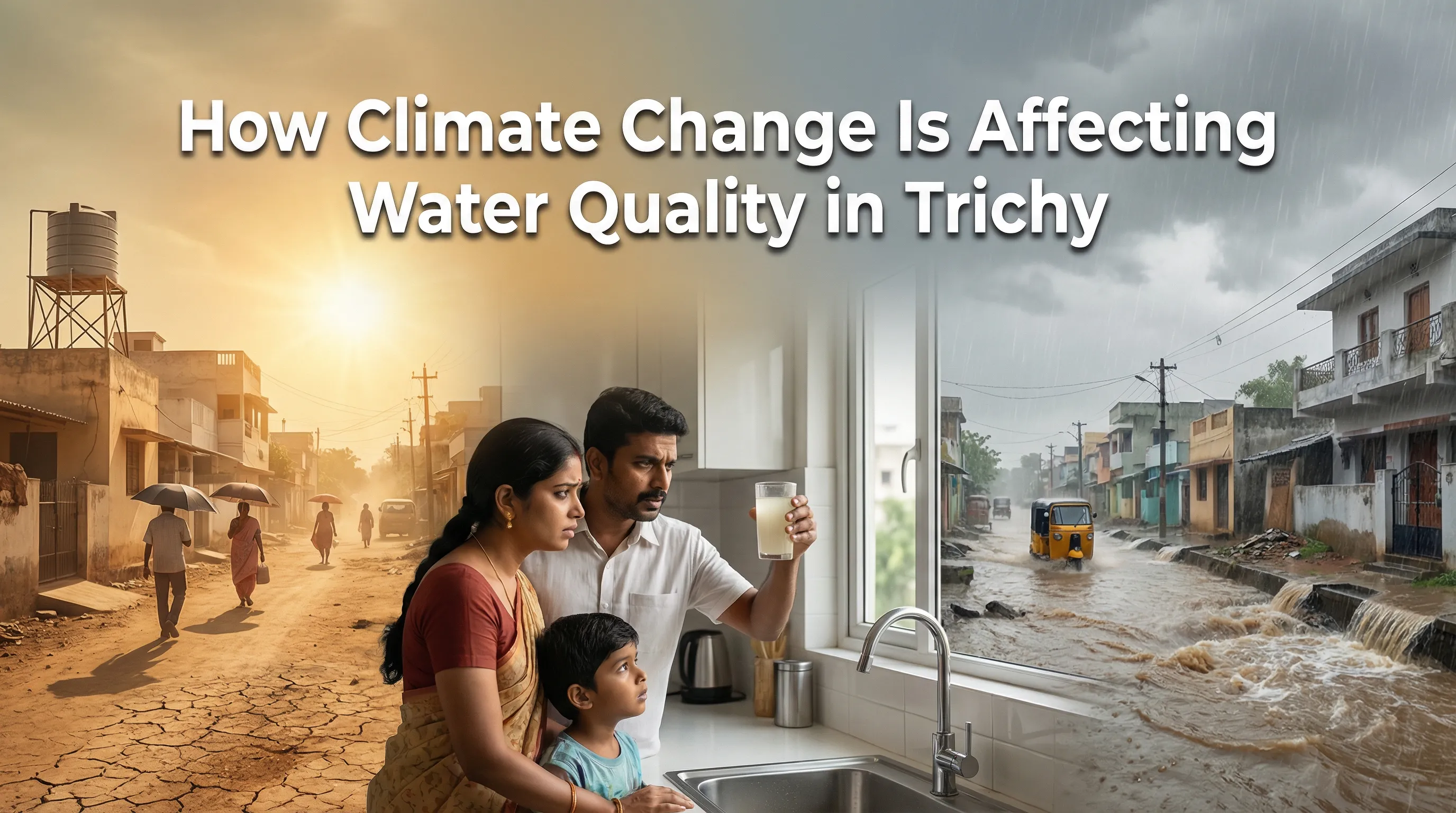
Climate change is no longer a distant global issue—it is a present and visible reality. Rising temperatures, unpredictable rainfall, prolonged droughts, and intense storms are affecting cities across India. In Trichy (Tiruchirappalli), these environmental shifts are quietly but significantly influencing one of the most critical resources: drinking water quality.
While conversations often focus on water scarcity, the impact of climate change on water quality is equally concerning. Changing weather patterns alter groundwater chemistry, increase contamination risks, and stress existing water infrastructure. Let’s explore how climate change is reshaping water quality in Trichy and what it means for residents.
1. Rising Temperatures and Groundwater Changes
Trichy has been experiencing hotter summers and longer dry spells. Rising temperatures affect water quality in several ways:
Increased Evaporation
Higher heat causes faster evaporation of surface water, concentrating minerals and dissolved salts in remaining water sources. As a result:
Groundwater becomes more mineral-rich
Taste and clarity may change
Dissolved solids may increase
Deeper Borewell Extraction
As surface water levels decline, communities rely on deeper borewells. Deeper groundwater often contains:
Higher mineral concentrations
Natural chemical imbalances
This shift directly impacts drinking water safety and treatment requirements.
2. Irregular Rainfall Patterns
Climate change has altered rainfall distribution. Instead of steady seasonal rains, Trichy now experiences:
Intense short-duration downpours
Delayed monsoons
Extended dry periods
Impact on Water Quality
Heavy rainfall can:
Wash contaminants into rivers and reservoirs
Overwhelm drainage systems
Increase sediment and turbidity in water sources
Sudden rainfall after long dry spells often leads to muddy water and increased bacterial risk.
3. Flooding and Contamination Risks
Extreme rainfall events can lead to localized flooding. Floodwater often carries:
Sewage overflow
Agricultural runoff
Industrial waste
When floodwater mixes with drinking water pipelines or open wells, contamination risk rises significantly.
Even if supply resumes quickly, contamination may persist unless properly treated.
4. Drought and Mineral Concentration
Prolonged drought conditions reduce natural groundwater recharge. As water tables drop:
Remaining groundwater becomes more concentrated
Salinity levels may increase
Mineral balance changes
This can make water harder to treat and less suitable for direct consumption.
5. Agricultural Runoff Intensification
Climate variability affects farming practices around Trichy. Intense rainfall can carry:
Fertilizers
Pesticides
Nitrates
These substances can seep into groundwater or nearby water bodies, altering water chemistry and requiring advanced purification methods.
6. Stress on Municipal Infrastructure
Changing climate conditions put additional pressure on urban water systems.
Effects include:
Pipeline leaks due to soil movement
Overloaded drainage during heavy rains
Irregular supply due to fluctuating river levels
Such stress increases the possibility of contamination between treatment plants and household taps.
7. Changing River Water Quality
River-based water supply depends on stable flow patterns. Climate change affects river systems through:
Reduced base flow during drought
Increased pollution concentration during low flow
Sudden contamination spikes during heavy rains
These fluctuations make it harder to maintain consistent drinking water quality.
8. Impact on Storage Systems
Higher temperatures promote bacterial growth in stored water. In Trichy’s climate:
Overhead tanks heat up quickly
Warm water supports microbial activity
Infrequent cleaning increases risk
Climate warming makes storage hygiene more important than ever.
9. Increased Water Treatment Demand
As water quality becomes unpredictable, households and commercial buildings require:
More frequent filter replacement
Higher purification capacity
Better water testing practices
Water treatment systems must adapt to changing source conditions.
10. Public Health Implications
Water quality changes due to climate factors may contribute to:
Seasonal stomach infections
Increased waterborne diseases
Skin and digestive issues
While not always directly attributed to climate change, fluctuating water conditions increase vulnerability.
11. Economic Impact on Residents
Poor water quality leads to:
Higher maintenance costs
Appliance damage
Increased purification expenses
As climate pressures intensify, managing water quality becomes both a health and financial concern.
12. Future Risks for Trichy
If climate trends continue:
Groundwater depletion may accelerate
Treatment costs may rise
Water quality variability may increase
Urban planning must integrate climate resilience into water management strategies.
13. Climate-Resilient Water Solutions
To adapt to changing conditions, Trichy residents and authorities can focus on:
Rainwater Harvesting
Improves groundwater recharge and reduces mineral concentration.
Sustainable Water Usage
Encourages conservation and reduces over-extraction.
Advanced Monitoring Systems
Real-time water quality monitoring can detect changes quickly.
Regular Testing
Frequent water testing helps identify shifts in water chemistry early.
14. Role of Technology in Climate Adaptation
Future-ready water systems may include:
Smart purification systems
Automated quality alerts
Energy-efficient treatment solutions
Technology will be key in adapting to climate-driven water changes.
15. Community Awareness and Responsibility
Climate change is a collective challenge. Residents can:
Conserve water
Maintain storage hygiene
Support sustainable water practices
Advocate for better infrastructure
Individual actions contribute to overall resilience.
Conclusion
Climate change is reshaping water systems across the globe, and Trichy is no exception. Rising temperatures, irregular rainfall, flooding, and groundwater stress are altering water quality in subtle but significant ways.
Ensuring safe drinking water in the future will require:
Smarter infrastructure
Climate-resilient planning
Responsible water use
Advanced purification technologies
Understanding the link between climate change and water quality is the first step toward building a safer, more sustainable future for Trichy.
Clean water is not guaranteed by nature—it must be protected, managed, and preserved.
FAQ's
Climate change is increasing temperatures, altering rainfall patterns, and causing more extreme weather events in Trichy. These changes lead to water contamination, reduced groundwater recharge, algal growth in rivers and tanks, and higher levels of pollutants in drinking water sources.
Heavy rainfall often worsens water pollution. During intense rains, sewage overflow, industrial waste, and surface pollutants are washed into rivers, lakes, and groundwater sources, increasing contamination levels.
Groundwater quality is declining due to reduced recharge from irregular rainfall, over-extraction, increased salinity, and contamination from urban runoff and waste disposal. Climate change is accelerating these issues.
Yes, rising temperatures and flooding create conditions that allow harmful bacteria and pathogens to grow. Contaminated drinking water increases the risk of waterborne diseases such as diarrhea, cholera, and typhoid.
Residents can install proper water purification systems, practice rainwater harvesting, avoid dumping waste into water bodies, support sustainable water management policies, and regularly test their drinking water quality.